20 filmmaking tricks most viewers never notice
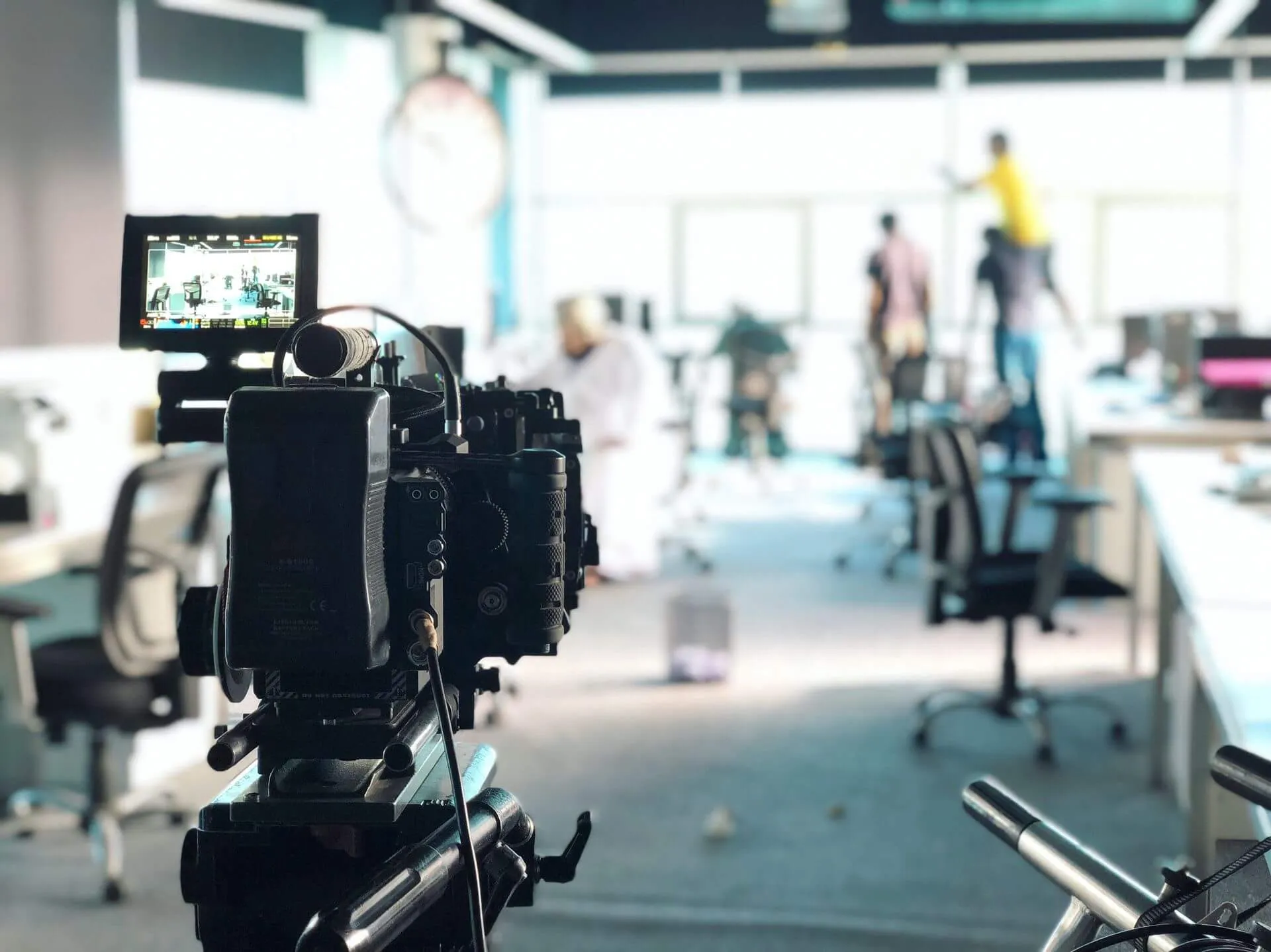
Background conversations
You have seen actors chatting behind a film’s main characters. In reality, they are simply moving their lips without making a sound. Some extras silently recite numbers: 341, 29, 45, 119, 9, and so on. Any extraneous sound would be picked up by the lead actor’s microphone, so background performers often remain completely silent. If the script calls for applause, they mimic clapping without letting their palms touch.
The secrets of sound
Almost anything at hand can be used to create sound effects. In The Lord of the Rings, for example, the terrifying shrieks of the Nazgûl were made by rubbing a plastic plate against a glass. Sound designers working on horror films use fruit and vegetables, particularly cabbages and watermelons, to imitate breaking bones, pierced eyes, and more. That is another of cinema’s secrets.
The final cut
Not every scene filmed from the script makes it into the final cut. This is why some films also have extended editions. The Lord of the Rings, for instance, includes all the scenes devoted fans consider essential in a version that runs three hours longer.
Interestingly, Titanic originally ran for five hours. For its theatrical release, many scenes that explored the characters in greater depth had to be removed.
One showed Captain Smith calling through a megaphone for the lifeboats to return and pick up as many people as possible. A scene of the rescue aboard the Carpathia was also removed. The ending, however, remained the one film lovers around the world know.
Chroma key
If you have seen a green screen on a film set, you have seen chroma key in action. Once a performer has been filmed against it, a computer can remove all the green pixels, leaving the performer isolated. That image can then be placed against any background required.
A chroma-key screen can be any color, but green is the most common because it is absent from human skin tones and therefore easier to separate.
Children in horror films
How do children perform in horror films? The whole process is presented as a game: they are asked to run around the set with a doll, spill red juice, look at an actor, and so on. Young performers often do not even know what kind of film they are making.
A busy set full of people is not frightening; the truly terrifying elements are added in postproduction. Danny Lloyd, the boy in Kubrick’s The Shining, for example, only discovered what kind of film he had appeared in at sixteen, when he watched the complete version.
Computer graphics in film
The vast castles and futuristic cities on screen are not always computer graphics or full-size sets. They may be large miniatures, or “bigatures,” as set designers have nicknamed them.
Intimate scenes
These are among the most psychologically demanding scenes for actors. To make things easier, they are often scheduled toward the end of the shoot, once the cast have got to know one another and developed some rapport. Rehearsals are repeated fully clothed, the number of people on set is kept to a minimum, and, if necessary, body doubles are used.
Filming mirrors without showing the camera
Mirrors are another challenge: the camera must not appear in the reflection. Fortunately, there are several tricks. One is to shoot at an angle. The actor looks at the camera’s reflection rather than their own, creating the impression that they are looking straight at themselves.
James Cameron found an unusual solution for Terminator 2. Schwarzenegger himself and Linda Hamilton’s twin sister played the reflections, while a double and Linda Hamilton played the characters on this side of the mirror.
Characters eat; actors do not
Characters may eat on screen, but the actors often do not. With so many takes, they cannot eat the food every time a scene is filmed, especially when it is a full meal rather than a light snack. Instead, they chew without swallowing. Special containers are kept on set for them to spit the food into.
Film costumes
Costumes can travel from one film to another. As actor Dawn McHarty revealed, a costume worn in Insurgent had previously appeared in Pirates of the Caribbean.
Costume departments find ingenious ways to make things work. Not long ago, for example, a Game of Thrones costume designer revealed that the Night’s Watch cloaks were made from inexpensive IKEA rugs.
Cigarettes on screen
Actors do not smoke real cigarettes: with that many scenes, they would not last long. Instead, they use nicotine-free herbal cigarettes.
Sometimes, however, actors take immersion in a role a little further. On the set of The Evil Dead, the cast decided to portray young people smoking marijuana more convincingly by actually smoking it. The result was unexpected: they could not deliver convincing performances, and filming had to be rescheduled.
Nighttime road scenes
Look at the asphalt in a nighttime road scene and it will probably be wet. A wet surface reflects the light, creating striking contrast.
Ominous clouds
To create clouds gathering over a city, filmmakers use a special setup called a cloud tank, injecting paint or milk into a tank of water. If a flying saucer is needed among the clouds, a Frisbee can be introduced.
Epic scenes on water
Epic water scenes are filmed in purpose-built tanks, for example, the old Soviet storm tank in Crimea. The sets for Titanic, meanwhile, were built and then deliberately flooded.
Things are often not what they seem
Many objects used in filmmaking are something other than what they appear to be:
- drugs are powdered milk, vitamins, or icing sugar;
- blood is corn syrup with food coloring, although many recipes exist;
- glass is sugar glass or thin plastic;
- beer is apple juice;
- spirits are vinegar;
- ice in a glass is gelatin;
- sweat is rosewater or glycerin.
Even the snow in many films is artificial. In Hollywood, Snow Business produces it using recycled paper.
The main secret behind successful movie effects is keeping them under wraps until the premiere. That is why gadgets, photography, and video recording are prohibited on set. During the filming of Divergent, a crew member who posted a behind-the-scenes photograph on social media was reportedly fired and blacklisted by film companies.
Filmmaking is a complex process that brings a new work to life. There is no reason to risk revealing every trick before the film is ready.